
The Climate Heartbeat prototype visualizes precipitation patterns and hydrological fluctuations as rhythmic pulses, drawing parallels between atmospheric water cycles and human physiology. The Human-Water Interface (HWI) extends this at a microscopic scale, translating real-time water properties into affective sensory narratives — a dynamic, “living” sculpture that serves as a communication interface between humans and water bodies.
ISSUE 01
Noéa, previously named "water persona", is a transdisciplinary platform conceived through the collaboration of MoW and the Hong Kong Observatory (HKO) in 2024. This initiative fuses the realms of art and science to create a visual exploration of the critical relationship between water and climate, inviting viewers to forge deep emotional and psychological connections with water, while offering actionable pathways to a more sustainable future.
download
ISSUE 02
Noéa delves into the “hydro-affects” – the emotional and interconnected states of Earth’s water systems. By blending objective hydrological data with subjective, anthropomorphic interpretations, we bring water to life, framing its fluctuating moods and rhythms as a reflection of the city’s own pulse.
download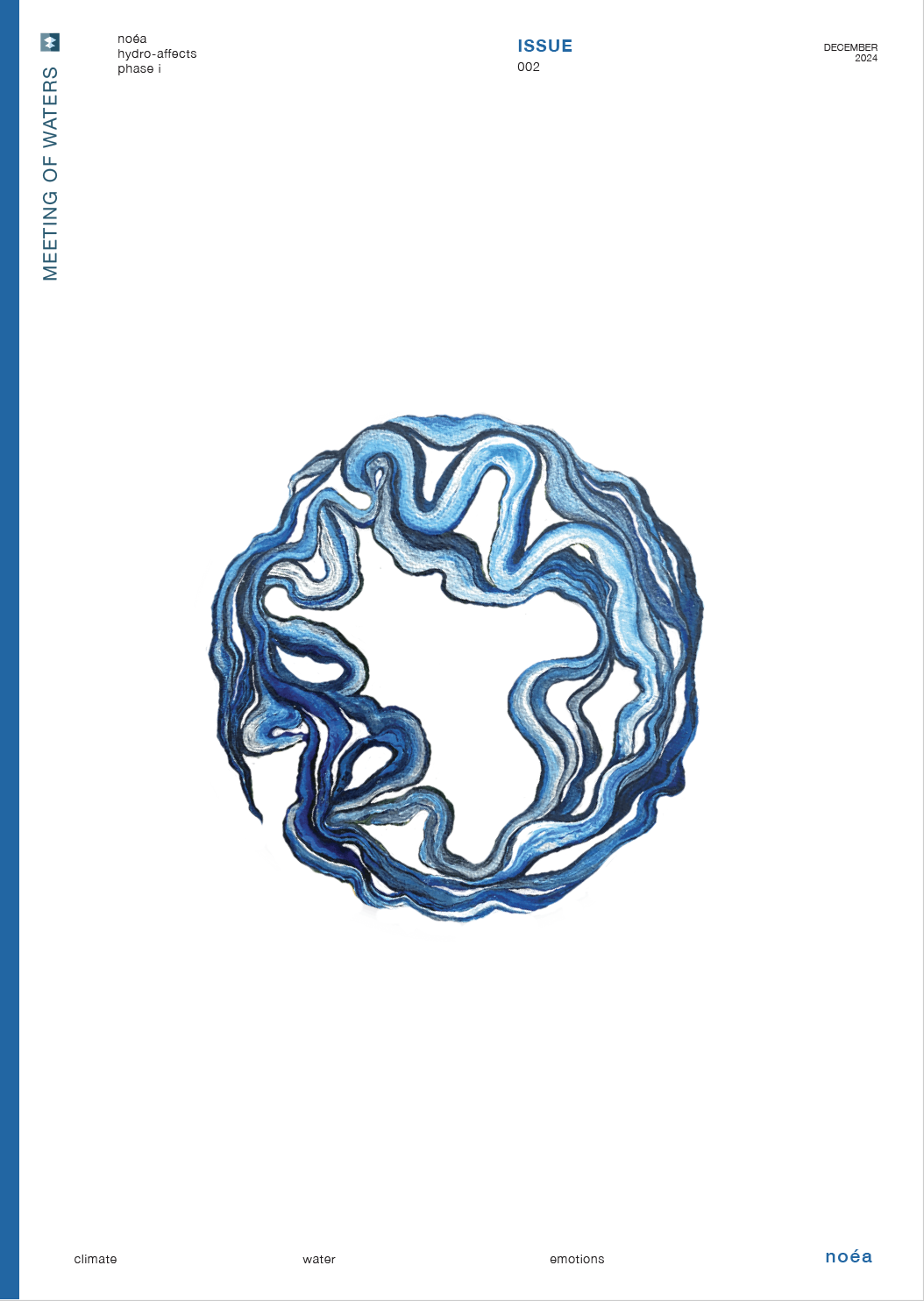
ISSUE 03
This issue features the first prototype of Noéa, our affective AI interface, which translates climate data into emotional patterns. In this issue, we begin listening—through data, through culture, through rain—for the heartbeat of Hong Kong.
downloadAlso see Hong Kong Heartbeat

ISSUE 04
This issue outlines the blueprint for training Noéa’s affective AI system. Through comparative data analysis and the development of an emergent emotional model, we begin to transform rainfall into meaning. In parallel, we offer a glimpse into the future of Noéa’s design: a second prototype exploring proximate hydrological sensing and the vision towards embodied intelligence.
download
ISSUE 05
Issue 5 unites the XR prototype of Noéa, its debut at the Zurich AI Festivalt, the WMO collaboration, and the ethics of empathy and technology.
download
ISSUE 06
This issue is built around the Rhine: 70 years of GRDC discharge records, a four-station longitudinal profile from the Swiss Alps to the Dutch border, and four diagnostic frameworks — hydrograph, seasonal flow cycle, flow duration curve, and master recession curve — that read the river as a continuous physiological body rather than a series of measurements.
download